

I was alone in the dark, facing a simple reality: Get down the mountain or die.
We had already spent two nights at Camp 4, preparing for our final push towards the summit of Mount Everest. We were camped in what’s known as the “Death Zone,” at an elevation of roughly 26,000 feet. At 1:00 a.m. with oxygen masks on and headlamps cutting thin lines through the air, we set out for the summit.
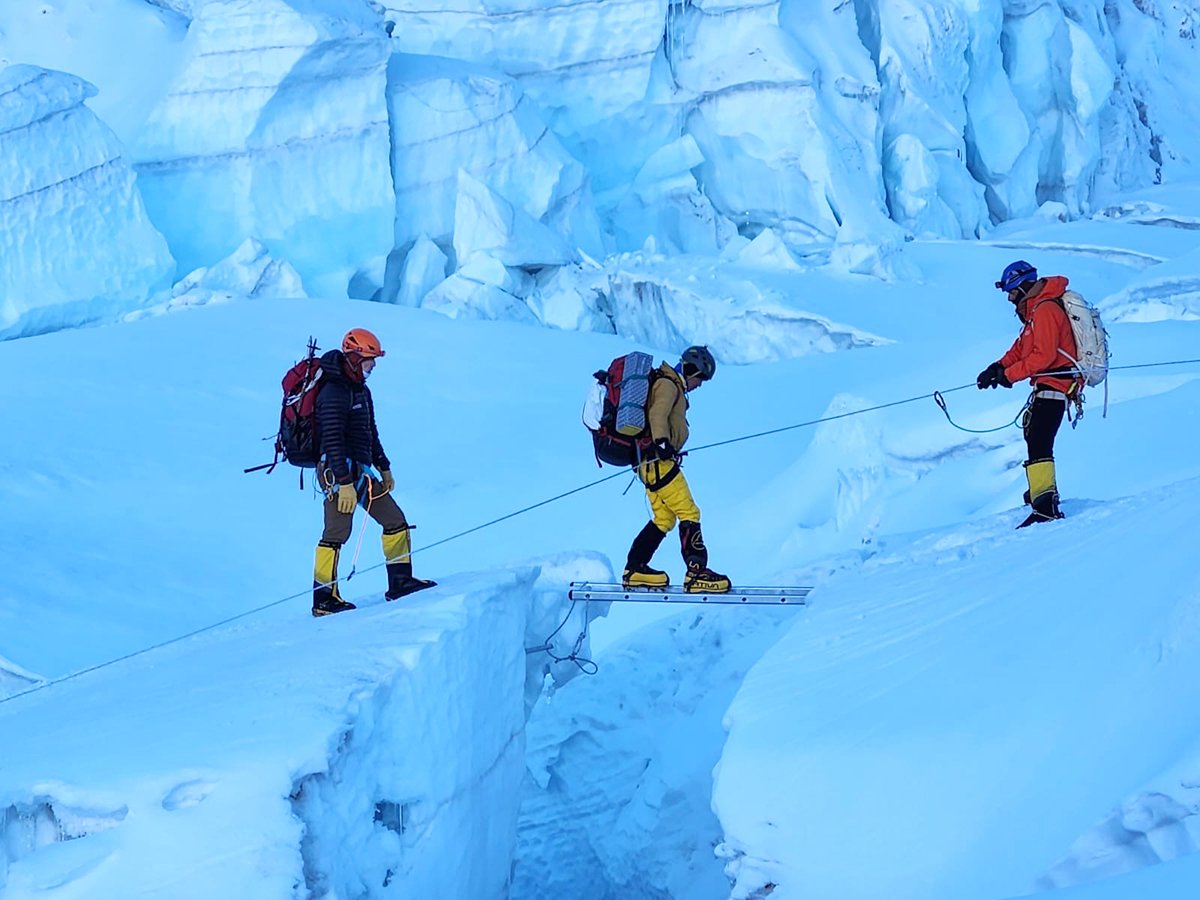
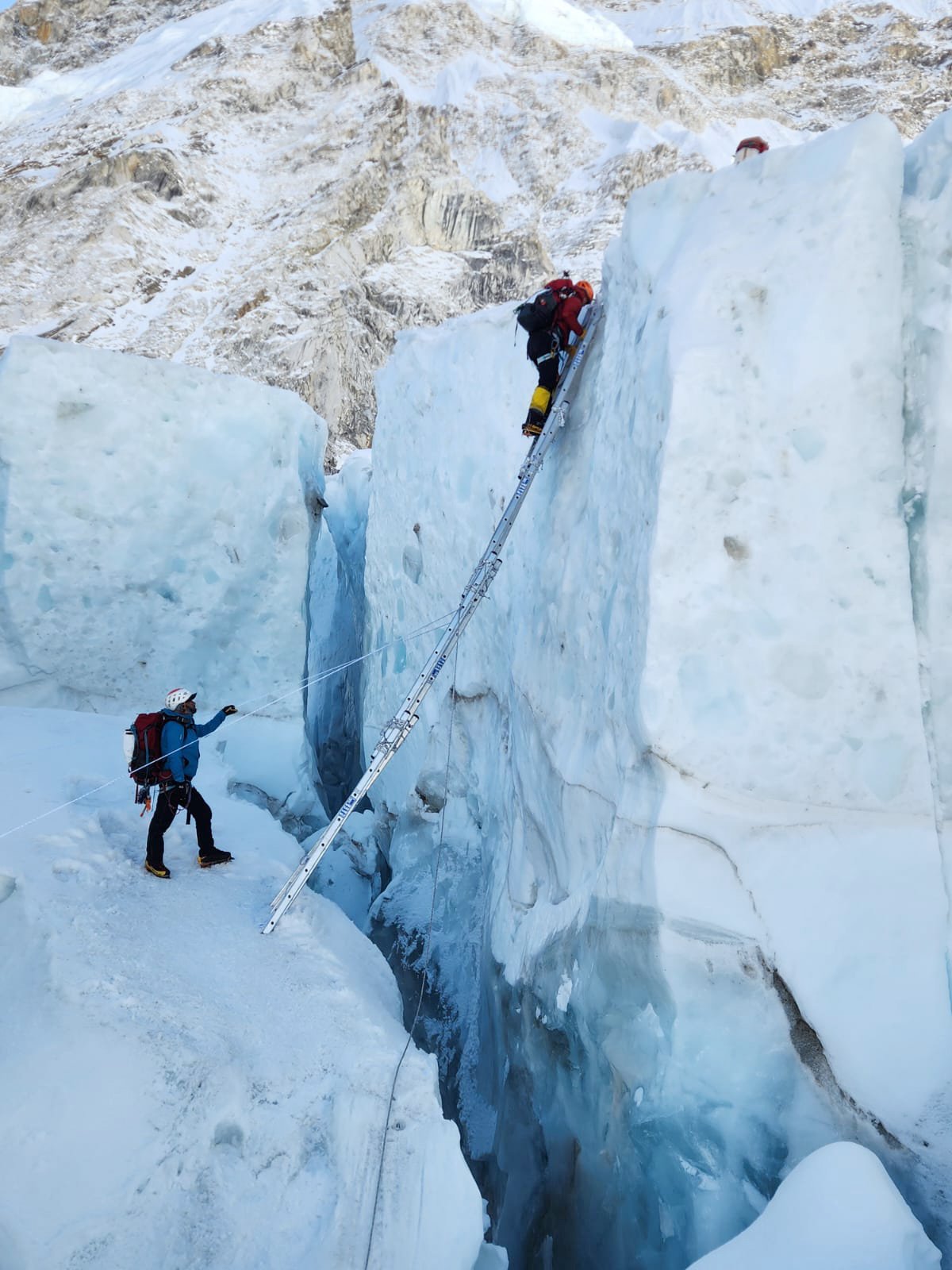
I had spent years thinking about a moment like this. Months planning. Weeks acclimatizing at Base Camp. Days pushing across the Khumbu Icefall, the most dangerous part of the climb, and through Camps 1, 2, and 3. I rehearsed it in my head. I visualized success. I prepared my body. I prepared my mind.
But within the first hour of leaving Camp 4, I knew I was done.
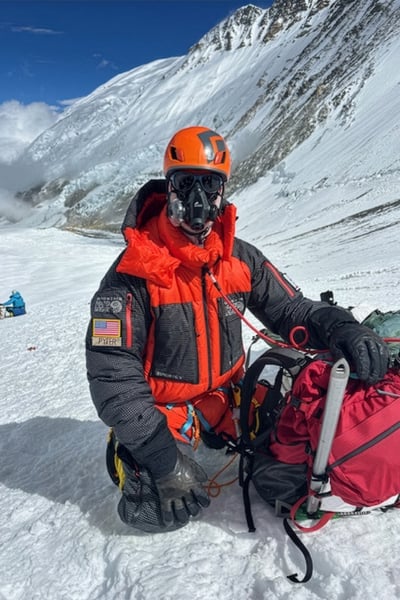
I had lost my voice completely. I was coughing uncontrollably and my chest felt like it was filling with liquid. I recognized the flashing red lights of my body’s alarm system: It was early signs of HAPE — high altitude pulmonary edema. At 26,500 feet, HAPE isn’t just a nuisance you can ignore. There’s a reason it’s called the Death Zone.
There are no helicopters at Camp 4. No quick rescues. The rest of the team kept on climbing. If I couldn’t descend under my own power, that was it.
I had to muster every ounce of strength I had to get from Camp 4 to Camp 3. Then to Camp 2. I had a Sherpa with me who didn’t speak English and was suffering too. It wasn’t heroic. It was terrifying.
Eventually, I was helicoptered from Camp 2 to Kathmandu, Nepal, and admitted to a hospital.
When I got home, people who don’t climb love to ask, “Did you summit?”
Of course, my answer is, “No.”
But my longer answer is that, in a way, I did. I met all of the goals I had for myself, and can confidently say I pushed myself to my absolute limit. I had a plan and stuck to it. I climbed down without any regrets.
I made the right decisions, and I survived to tell the story.
Where It Started
My passion for the mountains predates my career in financial planning by two decades.
I grew up in Oregon, surrounded by the Cascade Range’s famous peaks: Mount Bachelor, the Three Sisters, Mount Hood, Mount Jefferson, and Mount Washington. I was fortunate to be in a family that spent a lot of time outdoors and instilled in me a love and passion for the mountains.
I think I was about 10 years old when I first climbed to the summit of Mount Bachelor, back when there wasn’t a chairlift to the top. I’d climb up and ski down. When I was up there, I’d look across the horizon at the other mountains and think, It’d be cool to go to the top of that peak.
In my late teens and early 20s, I started chasing those dreams. I’ll admit, I was a bit reckless in those days. I wasn’t well trained and in hindsight was probably taking some unnecessary risks with my friends as we’d scramble up mountains on weekends.
I loved it, but it all took a back seat to my other priorities in life — college, law school, and starting a career in D.C. politics before moving to San Francisco to pursue my now-wife, Susie.
Climbing went quiet for nearly a decade. I still skied, but the mountains weren’t central to my life.
In law school, I started taking corporate finance and business law classes. I studied securities regulation, corporate taxation, and mergers and acquisitions. I began reading the Wall Street Journal.
My pivot to finance was very deliberate. After graduation from law school in 1998, I cut my teeth at a San Francisco investment bank, but — even early on — something didn’t sit right. Working for a Wall Street firm, the culture felt transactional. It was about trading and commissions. It wasn’t about helping people in their mission in life.
So I left in 2001 at the peak of the tech bubble. I moved into the RIA world at PricewaterhouseCoopers, where I received mentorship, met colleagues who are still my friends today, and discovered the fiduciary model. Partnering with clients and aligning their financial resources with their life goals? That felt right.
Rediscovering the Mountains — The Right Way
Around the year 2000, through a nonprofit called The Guardsmen — a men’s philanthropic organization in San Francisco that raises money for at-risk youth — I found a new group of friends drawn by the mission of the organization: fun, fellowship, and philanthropy. We were all in similar stages of life, building businesses and raising families, but we craved fellowship.
So, several of us started climbing mountains together.
It began with Mount Whitney, then Hood, Rainier, Shasta, and the Grand Teton. We kept climbing larger mountains until we eventually summited Alaska’s Mount McKinley in 2018 and Aconcagua in Argentina in 2022. Each climb required more skill, more planning, more humility.
I climbed all of these mountains differently than the peaks in my youth. I hired professional guides. I trained intentionally. I invested in proper gear. I respected the process.
 It’s a little like financial planning. You can scramble up a mountain on your own, and many people do. Just like how many people start off by managing their own investments.
But when the mountain gets bigger and the stakes get higher, that’s when you realize the value of a guide.
The Sherpa community on Everest doesn’t get enough recognition. Without them, most Western climbers would never even attempt the mountain, let alone summit. They set the ropes through the Khumbu Icefall. They manage logistics. They increase safety and the likelihood of success.
They are critical partners.
That’s how I see financial planners.
I don’t dictate advice to clients. I listen. I partner with them and empower them with tools. I help them navigate blind spots. There’s trust. There’s collaboration. There’s humility.
Climbing is not a solo sport. It’s a team sport.
So is wealth management.
The Real Summit
For years, I said I’d never climb Everest because of the time, the cost, and the risk.
Before any climb, I evaluate those three boxes. Is the financial cost doable? Is the time away from family and work reasonable? Is the risk acceptable?
After summiting Aconcagua and with years of experience under my belt, I began to see how I could check those boxes for Everest.
I built the climb into my own financial plan with my wife. I collaborated with leadership and colleagues at work to get permission to step away for six weeks. I studied the risks carefully. Despite the catastrophes we’ve all read about, the risks can be managed with preparation and the right team.
I hired a fitness coach and trained for nine months. I prepared my gear, worked out the logistics, and even had an oxygen strategy.
My fellow Guardsman climbers and I arrived in Kathmandu on April 12, 2025. We trekked eight days to Base Camp and spent the next ten days acclimatizing at 17,000 feet. Halfway through the expedition, I got a severe chest cold and flew down to Kathmandu for antibiotics and a five-day recovery. I came back and over the following two weeks, completed additional acclimatization hikes through the legendary Khumbu Ice Fall up to Camp 2 and back to Base Camp to rest. On May 19, my team and I made a final pass through the Khumbu Ice Fall, through Camp 2 and Camp 3, and then up the Lhotse Face, crossing the infamous Yellow Band and climbing over the Geneva Spur, reaching Camp 4 on the afternoon of May 21 under severe weather conditions.
It was 1:00 A.M. on May 23 when the weather cleared and the lead guides decided that we would go for the summit. This final push to Camp 4 ravished my body. The remnants from my respiratory infection just a few weeks earlier resurfaced with a vengeance.
When you’re that high in elevation, it feels like an elephant is sitting on your chest. Your body is suffering just to survive. There’s very little distance between life and death, and you can feel that.
I was about 45 minutes into the summit bid at 26,500 feet when my physical and emotional gas tank went completely empty. My inability to move ahead was nonnegotiable. At that moment, I had no doubt about what to do. For me, turning around was not a failure. It was putting my ego aside, adapting to the current situation, and having the ability to take a different course in the best interest of myself and my loved ones at home.
That’s another parallel to financial planning. There are going to be moments when you don’t summit on schedule. Markets change. Health changes. Goals evolve. You have to pivot or make course corrections, extend your timelines, reduce consumption, and delay gratification.
I don’t carry a gnawing feeling that I have to go back. I may. There’s some planning underway for possibly returning in the next two or three years.
But I’m satisfied. I honored my plan and I achieved my goals: pushing myself to my limit and coming home to my family.
That, to me, is a successful climb.
All third parties and TradePMR are unaffiliated companies.